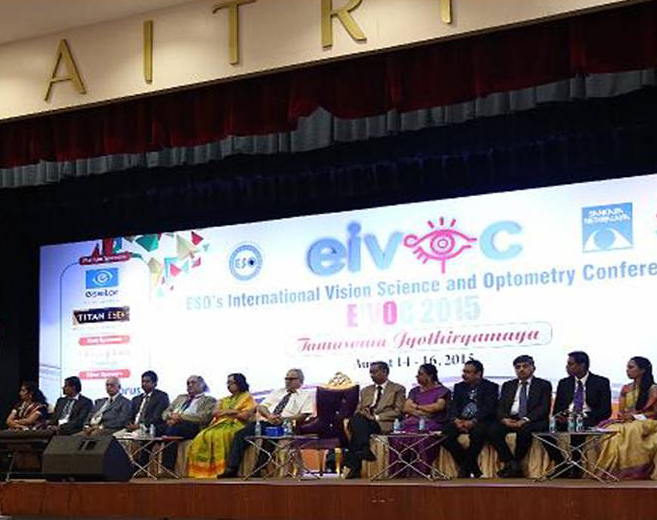
From Clinics to Classrooms: 50 Years of Wisdom with Prof. Gobinda Chandra Monda
.jpg)
Interview taken by Md. Zakaria Midya,
Optometrist | Myopia Educator
Q 1: Sir, congratulations on completing 50 years in the Optometry profession. How does this milestone feel?
Answer:
Thank you Zakaria and Optician India Magazine. Completing 50 years in Optometry feels like a blessing and an honour. When I look back, it feels as if the journey started just yesterday. I have witnessed the profession grow from a very basic structure to a well-defined healthcare discipline. This milestone reminds me of the responsibility I carry toward the next generation of optometrists.
Q 2: Sir, how did your journey into Optometry begin in 1975?
Answer:
After my Higher Secondary exam, one of my seniors pointed out a newspaper notice about the Optometry course at School of Optometry, Medical College, Kolkata, under State Medical Faculty of West Bengal. I applied, appeared for the exam and got selected. The course , Diploma in Optometry had started in 1974, so I became part of West Bengal’s second batch. As a science student, I felt instantly drawn to the subject when I learned it focused on optics and the eye.
Q 3: You have worked in various Government hospitals. What are the most memorable experiences from your service?
Answer:
I joined government service on 23rd February 1979 after hearing a radio announcement on recruitment circular, with my appointment letter issued from Writers’ Building for NRS Government Medical College and Hospital. Just before joining, I was transferred to Calcutta National Medical College and Hospital. Remarkably, within two months, there I became Chief of the Orthoptics Clinic, Glaucoma Clinic and Refraction unit under the Department of Ophthalmology, led by Prof. (Dr.) Ranabir Mukherjee. From being a passionate newcomer to one of the first Optometry employees in government service and then leading a specialty department, this was an incredibly fulfilling and lifelong memorable experience.
Q 4: What major changes have you seen in Optometry over the last five decades?
Answer:
Optometry has evolved from being mainly refraction-based to a comprehensive eye-care profession. Today, optometrists are deeply involved in primary care, contact lenses, low vision, binocular vision, myopia control, dry eye and diagnostics. Technology has advanced enormously and the recent implementation of the bill has further strengthened recognition and regulation of the profession.
Q 5: Which technological advancements impressed you the most in your career?
Answer:
The technologies that impressed me most are those that truly advanced clinical precision and patient care. Autorefractors and digital phoropters improved the chair time and accuracy of refraction, OCT transformed ocular diagnostics with detailed structural imaging and modern myopia-control technologies introduced a new level of preventive care. Together, these innovations have significantly strengthened Optometry’s clinical scope.
Q 6: You guide many young optometrists. What values do you always tell them to follow?
Answer:
With five decades in this profession, I always tell young optometrists to build their careers on strong values. First, be ethical and honest with every patient—clinical integrity is the foundation of our work. Second, remain curious and keep learning; Optometry evolves constantly and so must we. Third, stay humble and respect your teachers, colleagues and patients. And finally, remember that empathy is just as important as knowledge. When you treat patients with compassion, you not only improve their vision—you earn their trust.
Q 7: Sir, is there any particular achievement that you consider especially meaningful?
Answer:
Yes. In 2011 at Habra State General Hospital, I noticed that many people were suffering from snake bites due to poor awareness. Even though, as an optometrist, I was not authorised to speak on the subject, I initiated the idea of creating a documentary and collaborated with my colleague, Ophthalmologist Dr. Dayal Bondhu Majumdar. The documentary was circulated across hospitals and organisations to educate the public. Dr. Dayal later received the “Best Doctor of the Year” award for this work by government and I was genuinely happy. My real reward was knowing that our initiative helped save lives.
Q 8: After retirement, what inspired you to continue working as Academic Director at OPTOGRAPHY?
Answer:
Teaching has always been close to my heart. Serving as Academic Director at OPTOGRAPHY provides an invaluable platform to contribute to the academic development of future optometrists voluntarily. I love interacting with students—they keep me young and motivated. Their curiosity inspires me every day.
Q 9: What makes OPTOGRAPHY special to you?
Answer:
OPTOGRAPHY is a vibrant academic platform founded on passion, vision and a commitment to advancing Optometry. I have witnessed students grow, collaborate, publish and innovate through this platform. It is more than an educational group—it is a family of dedicated optometric minds. Being part of this non-profit, apolitical academic journey brings me immense satisfaction. I am especially proud of you Zakaria for founding OPTOGRAPHY in 2015 and guiding it to its 10-year milestone. Together, we continue to inspire and shape the future of Optometry.
Q 10: How did you balance patient care, learning and teaching throughout your career?
Answer:
Discipline & Love. I always believed that a good clinician must also be a good student. I dedicated fixed hours to patient care, reading, case discussions and later, teaching. When you love something, balance comes naturally.
Q 11: What challenges did you face during your early career?
Answer:
In the early days, we didn’t have access to advanced instruments, structured courses, or digital resources. Everything had to be learned manually and through experience. But those hardships built strong clinical foundations and problem-solving skills.
Q 12: What keeps you motivated even after 50 years in the field?
Answer:
Learning. Every patient teaches something new. Every student question makes me think deeply. As long as there is something new to learn, I remain motivated.
Q 13: What is your message for the new generation of optometrists?
Answer:
Please take pride in this profession—Optometry has an enormous future. Equip yourself with knowledge, stay updated, practise ethically and most importantly, serve with empathy. You can start your clinical practice once you feel confident in your knowledge and skills. Remember, vision is humanity’s greatest gift and it must be treated with the utmost responsibility.
Q 14: What role do you think Optometry will play in India’s future healthcare system?
Answer:
Optometry will play a vital role in India’s healthcare, addressing refractive errors, myopia, and age- or lifestyle-related eye conditions. Clinical optometrists, in particular, will be crucial in early diagnosis, patient management, and preventive care, bridging the gap between primary eye care and specialized ophthalmology. Formal recognition through the Optometry Council further strengthens their position as essential healthcare providers.


.jpg)
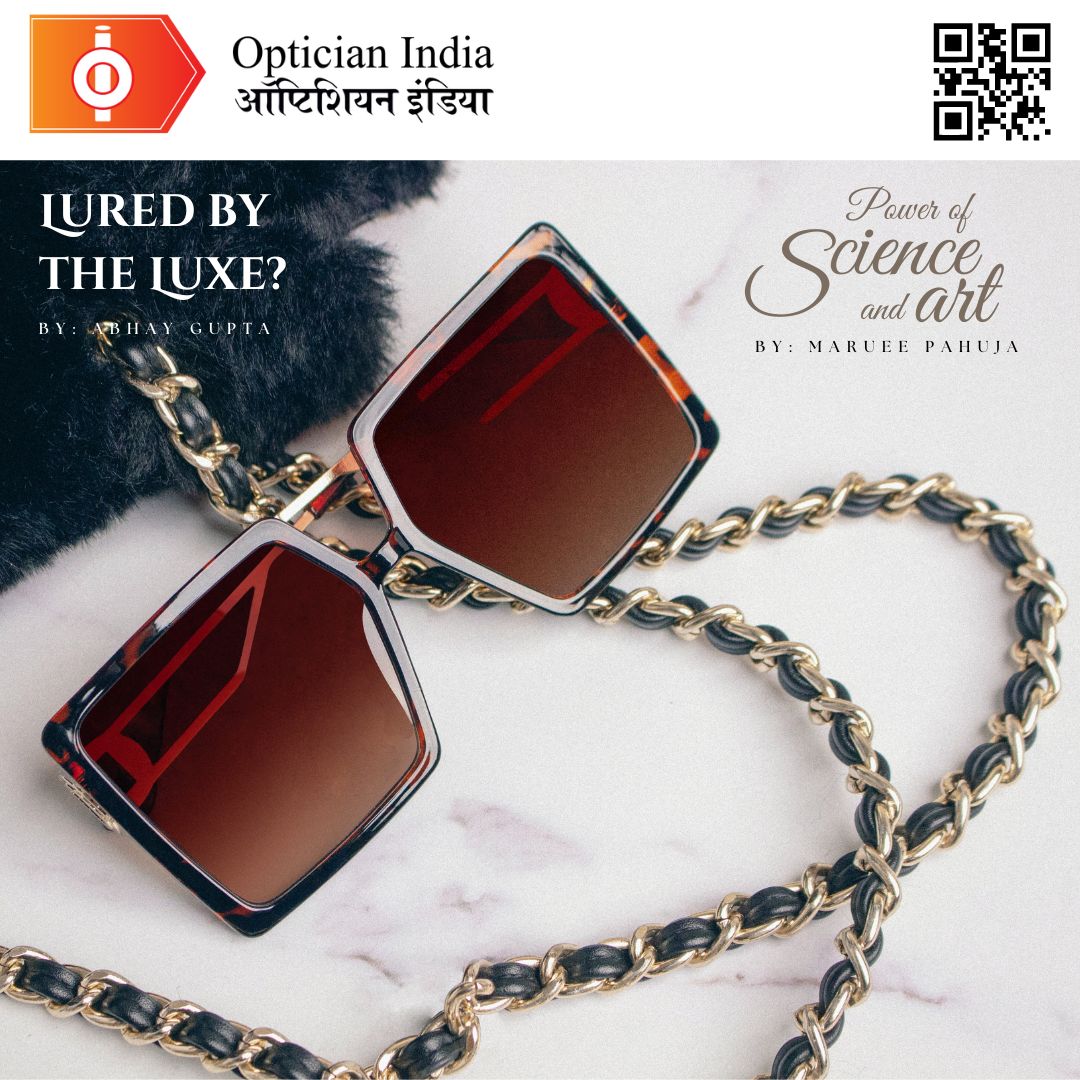
True luxury? Time well spent and emotion
By Angelica Pagnelli In the past, "sister brands"—the segmentation of brands by major fashion houses—served to sell products to those w...
read more1.jpg)
Who Can Call Themselves an Optometrist? NCAHP May Finally Settle the Question
A personal perspective on professional standards, diploma qualifications and the future eye-care workforce By Ramachandran P. India's eye-care sector is...
read more.jpg)
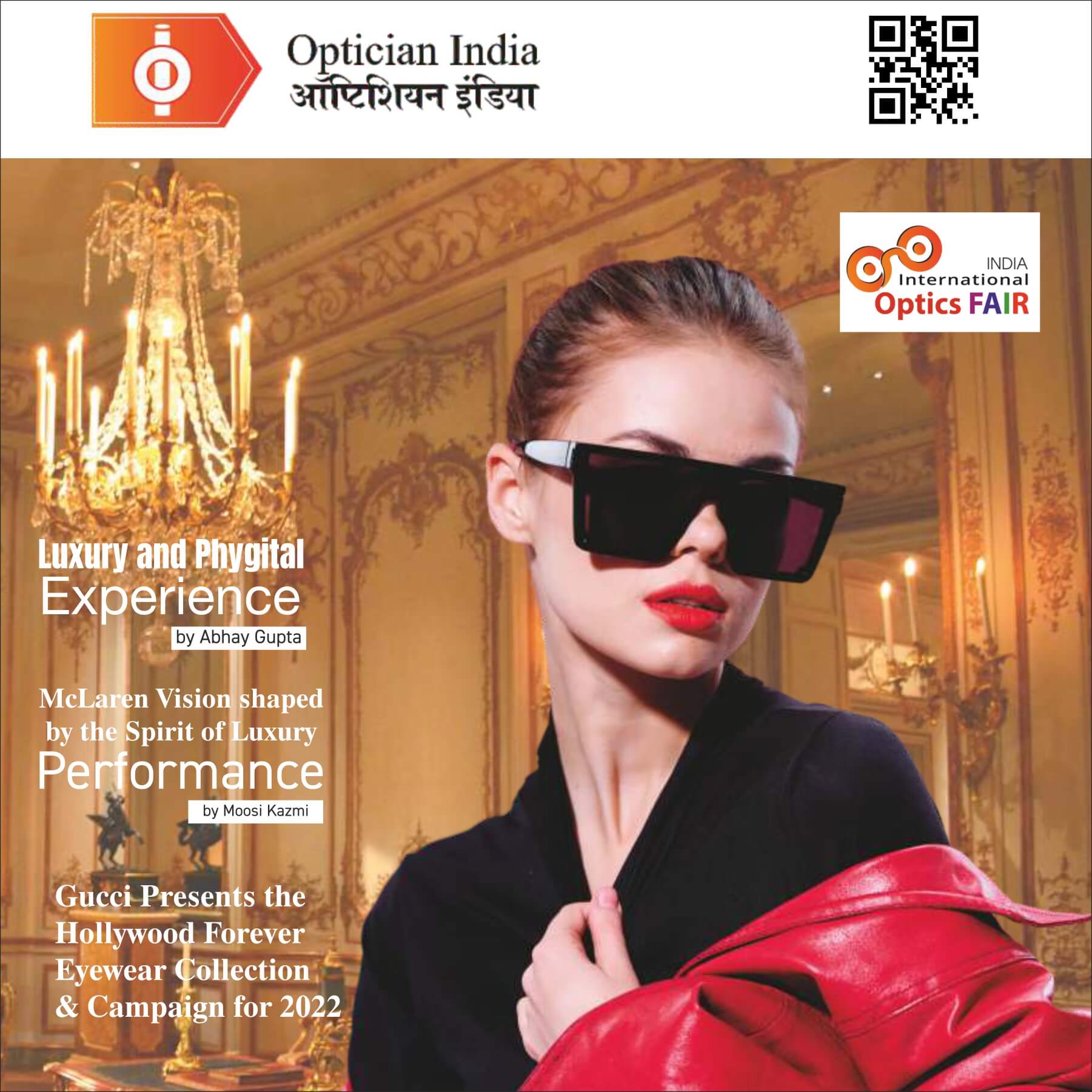
Future Ready Optician: Trust, technology and the new language of luxury optical retail
By Moosi Kazmi True luxury in optics is personal accuracy. This is where the independent optician remains irreplaceable. A family returned to the s...
read more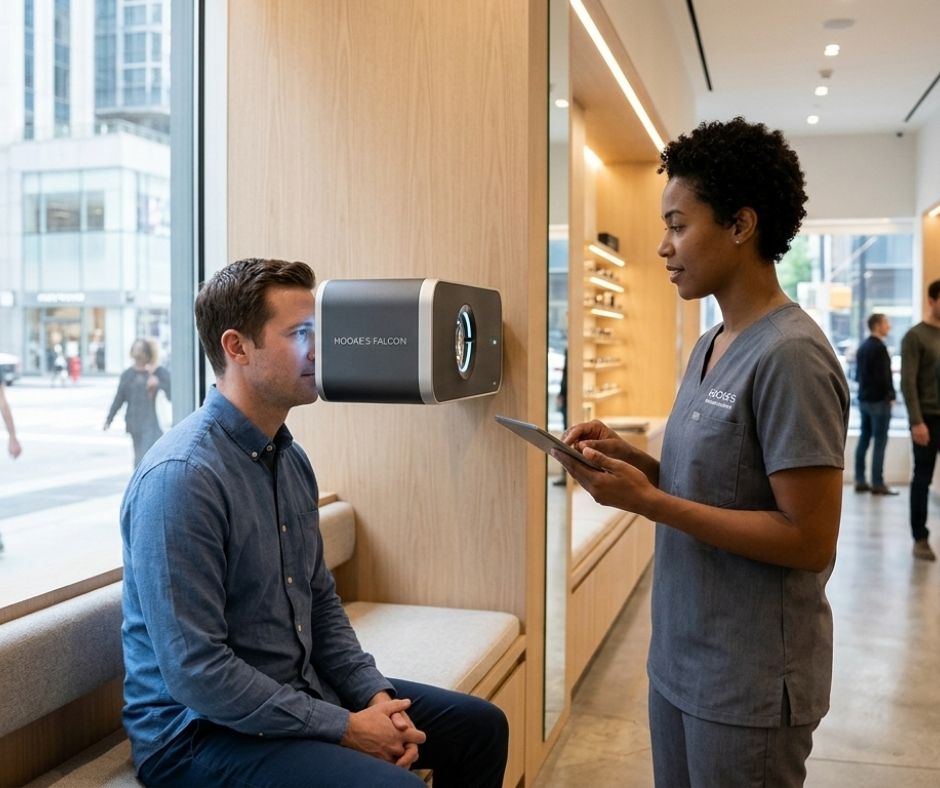
The Future of Eyewear in India: Premiumization, Technology, and Consumer Change
Interview with Akash Goyle In this exclusive interview, Madhur Gupta, Editor, Optician India sits down with industry pioneer Akash Goyle, the former Co...
read more1.jpg)
Childhood Myopia Enters Parliament: An Opportunity for India to Act
By Ramachandran P. Childhood myopia has finally received attention at one of the country’s highest policymaking forums. On 12 August 2026, Dr. Jas...
read more.jpg)
.jpg)
.jpg)
.jpg)
.jpg)
.jpg)
1.jpg)
.jpg)
.jpg)
_(Instagram_Post).jpg)
.jpg)
_(1080_x_1080_px).jpg)

with_UP_Cabinet_Minister_Sh_Nand_Gopal_Gupta_at_OpticsFair_demonstrating_Refraction.jpg)
with_UP_Cabinet_Minister_Sh_Nand_Gopal_Gupta_at_OpticsFair_demonstrating_Refraction_(1).jpg)
.jpg)



.jpg)

.png)