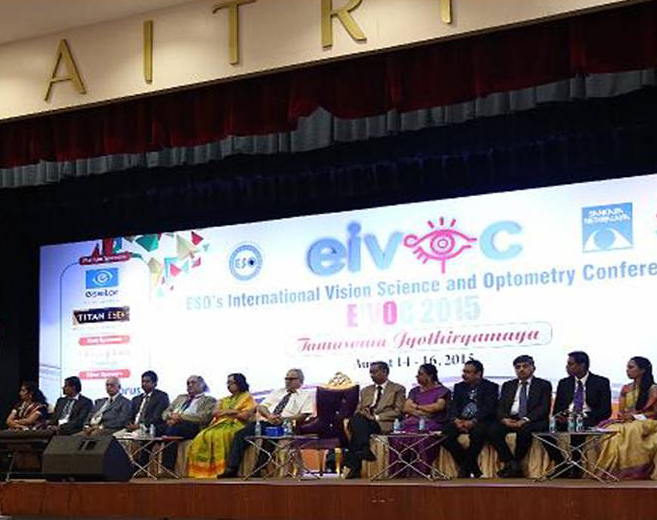
Key Takeaways: NCAHP Act 2021 and Optometry Curriculum 2025
_(3)1.jpg)
National Commission for Allied and Healthcare Professions (NCAHP) Act, 2021
|
|
.jpg) |
The NCAHP Act sets up a comprehensive regulatory framework to standardize and oversee allied and healthcare professions across India.
Key Highlights:
• Ophthalmic Sciences Professional –i. Optometrist 2267, ii Ophthalmic Assistant 3256, iii Vision Technician 3256
Ophthalmic sciences professional is a person who studies eye related ailments and specializes in the management of disorders of eye and visual system, limited in scope and complexity as performed by a medical doctor having Optometrists with a minimum of four years of baccalaureate degree and Ophthalmic Assistants/Vision Technician with a minimum of two years recognized diploma program.
• Regulatory Bodies:
- National Commission: Central authority responsible for setting policies, standards, and maintaining a Central Register.
- Professional Councils: Ten councils, including one for Ophthalmic Sciences.
- State Councils: Manage local implementation and state registers.
• Education and Practice Standards:
- Establishes uniform educational standards, curricula, and accreditation processes.
- Mandates registration; violations can lead to penalties including ?5 lakhs and imprisonment.
• Institutional Oversight:
- New institutions or courses require prior approval from State Councils.
Optometry Curriculum 2025 – Competency Based Curriculum for Optometry released by the Ministry of Health and Family Welfare.
The Optometry Curriculum 2025 reflects a modernization of optometric education, aligning with the standards set by the NCAHP Act.
Curriculum Enhancements:
• Evidence-Based Practice:
- Emphasizes integration of evidence-based methodologies.
• Comprehensive Training:
- Covers ocular anatomy, visual optics, contact lenses, binocular vision, and public health.
• Practical Exposure:
- Includes clinical training and externships.
• Soft Skills Development:
- Focus on communication, ethics, and professional behavior.
• Research Orientation:
- Encourages participation in research to foster inquiry and learning.
Implications for Optometry Professionals
• Standardization: Unifies education and practice standards.
• Professional Recognition: Enhances credibility and recognition.
• Global Alignment: Aligns with international standards.
• Quality Assurance: Ensures high standards through assessments and accreditation.
Way forward – Point of View
The Optometry Curriculum addresses the long pending need for a uniform curriculum across the country, and it is welcome move. There must be a similar curriculum drafted and firmed up for Vision Technicians & Ophthalmic Technicians nationwide as they play a crucial role in supporting eye care goals for the nation.
While looking at the supply side of the Optometrists and shortage to address the rural segment of the population we need to learn more from globally renowned institutions to such as Aravind Eye Care, L.V. Prasad Eye Institute, Sankara Nethralaya , Dr Shroff Charity Eye Hospital, Sankara Eye Foundation and the effective way to reach the rural masses which many corporations fail to understand the complexities. It is also equally important to rope in the Opticians community across the country to get their perspective and organizations like Vision 2020- The Right to Sight India and get their view in the policy making.
It is pertinent to look at WHO Specs 2030 which aims to address Uncorrected Refractive Error globally. Thereby the path ahead in India would be to collaborate with all stake holders in the eye care domain including tech companies and come up with a solution to increase the effective coverage across the country by the year 2030.
.jpg)
True luxury? Time well spent and emotion
By Angelica Pagnelli In the past, "sister brands"—the segmentation of brands by major fashion houses—served to sell products to those w...
read more1.jpg)
Who Can Call Themselves an Optometrist? NCAHP May Finally Settle the Question
A personal perspective on professional standards, diploma qualifications and the future eye-care workforce By Ramachandran P. India's eye-care sector is...
read more.jpg)
Future Ready Optician: Trust, technology and the new language of luxury optical retail
By Moosi Kazmi True luxury in optics is personal accuracy. This is where the independent optician remains irreplaceable. A family returned to the s...
read more
The Future of Eyewear in India: Premiumization, Technology, and Consumer Change
Interview with Akash Goyle In this exclusive interview, Madhur Gupta, Editor, Optician India sits down with industry pioneer Akash Goyle, the former Co...
read more1.jpg)
Childhood Myopia Enters Parliament: An Opportunity for India to Act
By Ramachandran P. Childhood myopia has finally received attention at one of the country’s highest policymaking forums. On 12 August 2026, Dr. Jas...
read more.jpg)
.jpg)
.jpg)
.jpg)
.jpg)
.jpg)

1.jpg)


.jpg)
.jpg)


_(Instagram_Post).jpg)
.jpg)
_(1080_x_1080_px).jpg)


with_UP_Cabinet_Minister_Sh_Nand_Gopal_Gupta_at_OpticsFair_demonstrating_Refraction.jpg)
with_UP_Cabinet_Minister_Sh_Nand_Gopal_Gupta_at_OpticsFair_demonstrating_Refraction_(1).jpg)
.jpg)








.jpg)



.png)