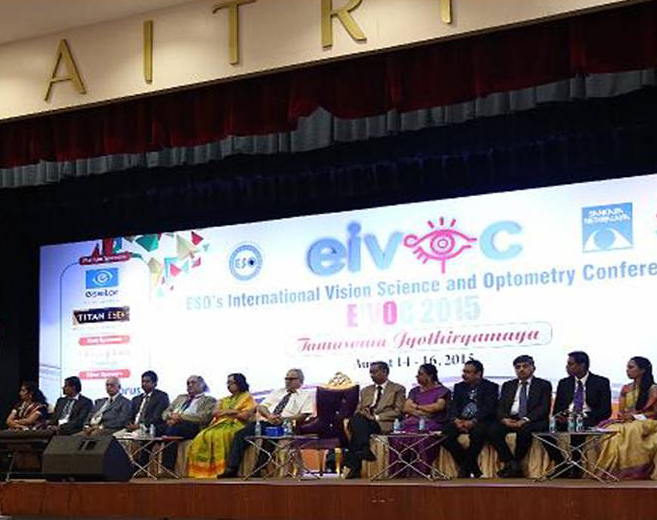
Beyond 6/6: The Interplay of Vision and Perception
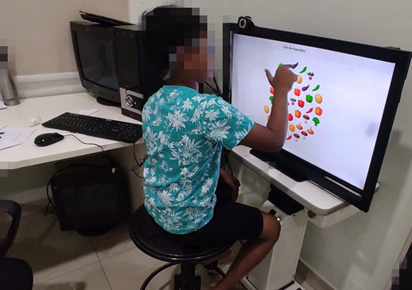
Vision is often thought of as a purely physical function—the ability of the eyes to see clearly. However, true vision extends far beyond this. It is a process that involves not just the eyes but also the mind and emotions. The clarity of what we perceive is influenced by our mental and emotional states, highlighting a profound connection between inner well-being and visual health.
 |
Modern science acknowledges that visual perception is a combination of physical sight and the brain’s interpretation of sensory input. Stress, anxiety, and emotional disturbances can impact how the brain processes what the eyes see, leading to symptoms such as blurred vision, eye strain, or headaches. Interestingly, this concept aligns with ancient Indian philosophy, which describes perception as being influenced by three distinct mental states:
Sattvic perception: This represents clarity, balance, and purity of mind. In a sattvic state, individuals can see things as they truly are, free from bias, distraction, or distortion.
Rajasic perception: This state is driven by desires, attachments, and emotional turbulence, resulting in exaggerated or distorted perceptions. It often clouds judgment and leads to restlessness.
Tamasic perception: This is a state of ignorance, confusion, or inertia. It hinders understanding and obscures clarity, much like a fog over the mind.
 |
These states are not just philosophical concepts; they have practical implications for optometry and vision care. Many patients experience visual disturbances that cannot be fully explained by physical eye conditions. For instance, a patient with perfect refractive measurements might still complain of blurred vision or discomfort. Often, these symptoms are linked to mental stress, emotional fatigue, or even lifestyle habits that promote tamas (ignorance) and rajas (imbalance).
As optometrists, it is essential to recognize the interplay between mental health and vision. Addressing the physical symptoms of visual disturbances is only part of the solution. By understanding the patient’s emotional and psychological well-being, we can provide more holistic care. Simple interventions like educating patients about the importance of stress management, recommending mindfulness practices, or encouraging relaxation techniques can significantly enhance their overall perception and visual health.
A calm and balanced mind—rooted in sattva—can sharpen both physical and metaphorical vision. It empowers individuals to see the world not just with their eyes but with clarity of understanding. This connection reinforces the idea that vision care extends beyond measuring 6/6 eyesight.
.jpg)
True luxury? Time well spent and emotion
By Angelica Pagnelli In the past, "sister brands"—the segmentation of brands by major fashion houses—served to sell products to those w...
read more1.jpg)
Who Can Call Themselves an Optometrist? NCAHP May Finally Settle the Question
A personal perspective on professional standards, diploma qualifications and the future eye-care workforce By Ramachandran P. India's eye-care sector is...
read more.jpg)
Future Ready Optician: Trust, technology and the new language of luxury optical retail
By Moosi Kazmi True luxury in optics is personal accuracy. This is where the independent optician remains irreplaceable. A family returned to the s...
read more
The Future of Eyewear in India: Premiumization, Technology, and Consumer Change
Interview with Akash Goyle In this exclusive interview, Madhur Gupta, Editor, Optician India sits down with industry pioneer Akash Goyle, the former Co...
read more1.jpg)
Childhood Myopia Enters Parliament: An Opportunity for India to Act
By Ramachandran P. Childhood myopia has finally received attention at one of the country’s highest policymaking forums. On 12 August 2026, Dr. Jas...
read more.jpg)
.jpg)
.jpg)
.jpg)
.jpg)
.jpg)
1.jpg)

.jpg)
.jpg)
_(Instagram_Post).jpg)
.jpg)
_(1080_x_1080_px).jpg)


with_UP_Cabinet_Minister_Sh_Nand_Gopal_Gupta_at_OpticsFair_demonstrating_Refraction.jpg)
with_UP_Cabinet_Minister_Sh_Nand_Gopal_Gupta_at_OpticsFair_demonstrating_Refraction_(1).jpg)
.jpg)




.jpg)


.png)