November is Diabetic Eye Disease Awareness Month
.jpg)
Prevent Blindness provides the public and professionals with free webpages, fact sheets, educational videos, toolkits, and social media graphics, to help prevent vision loss and blindness from diabetes
Prevent Blindness has once again declared November as Diabetes-related Eye Disease Awareness Month. Early detection and treatment of diabetes is essential, as the risk of developing significant vision loss and blindness increases the longer someone has diabetes. To help educate the public, including parents and care partners of individuals with diabetes, as well as allied health professionals, Prevent Blindness is offering free resources that include fact sheets and social media graphics in English and Spanish, web pages, and a variety of educational videos.
Two forms of diabetes-related eye disease include
Diabetic retinopathy occurs when small blood vessels leak and bleed in the retina. Diabetic retinopathy is a leading cause of blindness in American adults, affecting more than one in four of those living with diabetes.
Diabetic macular edema occurs when the small blood vessels in the center of the retina, called the macula, become leaky and cause the retina to swell. It can cause vision to become blurry.
Additional risks to eye health occur in persons with diabetes. According to the National Eye Institute, those with diabetes are 2 to 5 times more likely to develop cataracts, and to get them at a younger age. Also, having diabetes nearly doubles the risk of developing a type of glaucoma called open-angle glaucoma.
To help educate the public on the impact that diabetes may have on vision, Prevent Blindness has developed a comprehensive library of materials for consumers and professionals, including:
Diabetes + The Eyes Educational Toolkit– Available in English and Spanish, this resource includes Power Point presentations, fact sheets, shareable social media graphics and a dedicated webpage. The Diabetes + The Eyes program is supported by funding from Regeneron.
Prevent Blindness and the Focus on Diabetes™ video series– This comprehensive series includes a variety of educational videos designed for consumer audiences. Focus on Diabetes is an eye health initiative of the American Diabetes Association®.
The Juvenile Diabetes and Vision Health web resource and corresponding Diabetes + Your Eyes: Vision Health in Youth fact sheets (available in English and Spanish) provide detailed information on what parents and caregivers need to know to help youth with diabetes protect their eye health. These resources were developed with support from UnitedHealthcare.
Diabetes-related Vision Loss and Mental Wellness resources include the Diabetes, Vision Loss, and Mental Wellness video, featuring patient advocate Serena Valentine, mental health expert Melissa Taussig, and diabetes specialist Lisa Golden. A Diabetes-related Eye Disease and Mental Health fact sheet is also available in English and Spanish (supported by funding from Regeneron and VSP Vision).
“Diabetes can have a significant, negative impact on our eye health, as well as our overall health and quality of life,” said Jeff Todd, president and CEO of Prevent Blindness. “By working closely with healthcare professionals and adhering to medical advice, we can all work together to protect vision from the damaging effects of diabetes.”
 |
Video 1: https://youtu.be/8BZkuiIDAHI
Video 2: https://youtu.be/kzTLU2lVbFU
Video 3: https://youtu.be/Zal82Zka2Rg
Video 4: https://youtu.be/KGJYLhpmLDY
.jpg)
True luxury? Time well spent and emotion
By Angelica Pagnelli In the past, "sister brands"—the segmentation of brands by major fashion houses—served to sell products to those w...
read more1.jpg)
Who Can Call Themselves an Optometrist? NCAHP May Finally Settle the Question
A personal perspective on professional standards, diploma qualifications and the future eye-care workforce By Ramachandran P. India's eye-care sector is...
read more.jpg)
Future Ready Optician: Trust, technology and the new language of luxury optical retail
By Moosi Kazmi True luxury in optics is personal accuracy. This is where the independent optician remains irreplaceable. A family returned to the s...
read more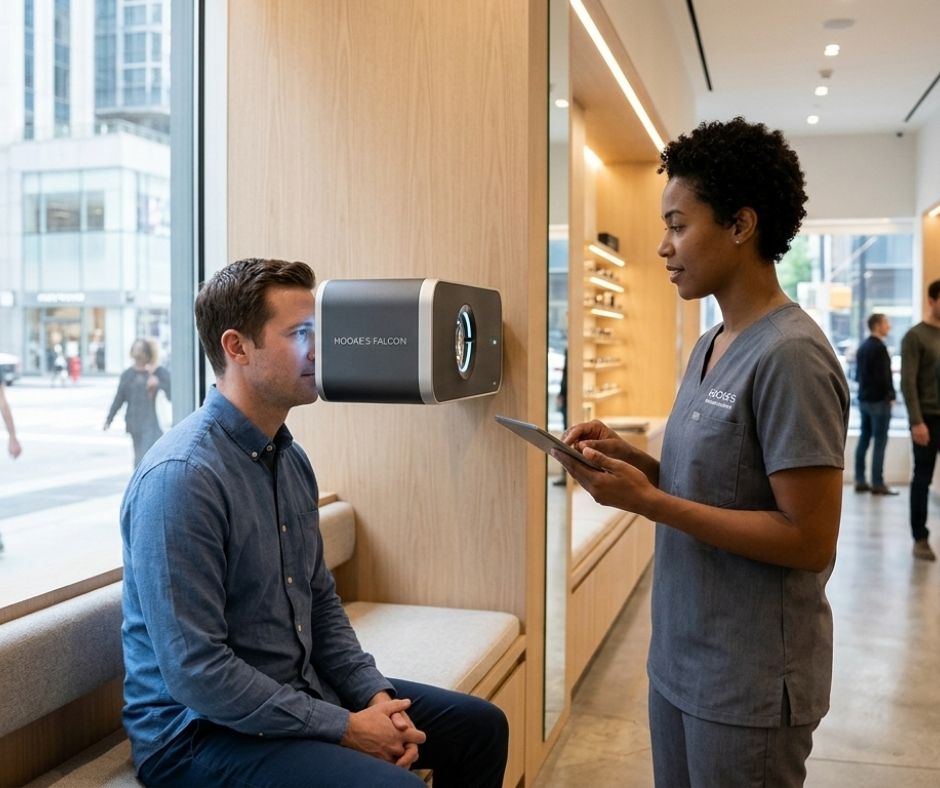
The Future of Eyewear in India: Premiumization, Technology, and Consumer Change
Interview with Akash Goyle In this exclusive interview, Madhur Gupta, Editor, Optician India sits down with industry pioneer Akash Goyle, the former Co...
read more1.jpg)
Childhood Myopia Enters Parliament: An Opportunity for India to Act
By Ramachandran P. Childhood myopia has finally received attention at one of the country’s highest policymaking forums. On 12 August 2026, Dr. Jas...
read more.jpg)
.jpg)
.jpg)
.jpg)
.jpg)
.jpg)
1.jpg)
.jpg)
.jpg)

_(Instagram_Post).jpg)
.jpg)
_(1080_x_1080_px).jpg)

with_UP_Cabinet_Minister_Sh_Nand_Gopal_Gupta_at_OpticsFair_demonstrating_Refraction.jpg)
with_UP_Cabinet_Minister_Sh_Nand_Gopal_Gupta_at_OpticsFair_demonstrating_Refraction_(1).jpg)
.jpg)


.jpg)
.png)