HOW TO BE AN IDEAL LASIK PATIENT
_(2).jpg)
INTRODUCTION:
In the search for perfect vision, LASIK surgery has become the most popular choice, offering a solution to get rid of glasses and contact lenses. However, not everyone is a suitable candidate for this life-changing procedure. Here’s what you need to know to determine if LASIK is right for you or not.
UNDERSTANDING LASIK
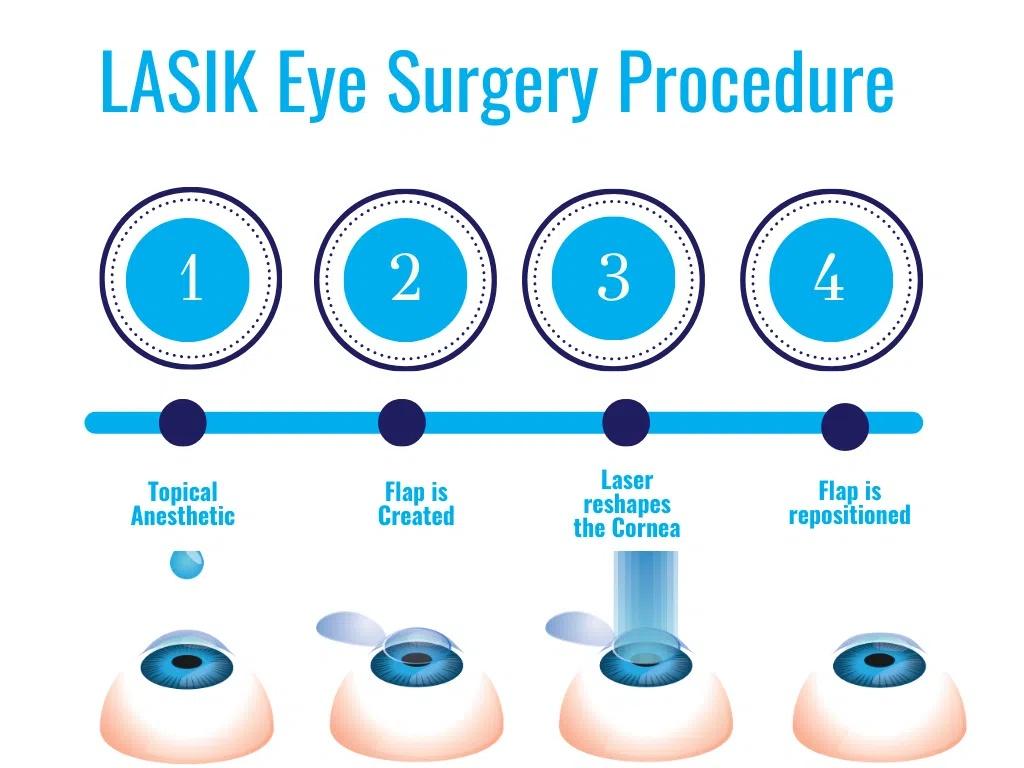
During LASIK surgery, a special type of cutting laser is used during the procedure which reshapes the cornea, allowing light to be properly focused onto the retina, resulting in clearer vision. The cornea is the dome-shaped clear tissue at the front of the eye.
In eyes with typical vision, the cornea bends — or refracts — light precisely onto the retina at the back of the eye. But with nearsightedness, farsightedness or astigmatism, the light is bent incorrectly. This incorrect refraction causes blurred vision.
Glasses or contact lenses can correct vision, but reshaping the cornea also provides the refraction needed to correct vision.
 |
General Eligibility Criteria Or Requirements
1.Ideal Age: Candidates should be at least 18 years old, with stable vision for at least one year. Vision changes can still occur in younger patients, making them less suitable for the procedure.
2.Stable VisionConsistency: Your prescription should be stable for at least one year before undergoing LASIK. Frequent changes in the prescription indicate unstable vision, which can affect the surgery’s success.
3.No Eye Diseases: Conditions like glaucoma, cataracts, keratoconus, or severe dry eyes can disqualify you from being a candidate. A comprehensive eye exam is necessary to ensure your eyes are healthy.
4.Corneal Thickness:LASIK with a resultant central cornea thickness <400 μm seems to be effective, safe, and predictable provided that preoperative topography is normal and the residual stromal bed thickness is >275 μm.
5.Specific Health Considerations
A.Corneal Thickness Sufficient Thickness: LASIK involves reshaping the cornea, so having sufficient corneal thickness is crucial. Thin corneas can lead to complications during and after surgery.
B.Pupil Size: Larger pupils can increase the risk of post- surgical issues like halos and glare, especially in low-light conditions.
6.General HealthSystemic Health: Autoimmune diseases, diabetes, are the conditions that affect healing and can impact your vision.
Note: Discuss your medical history with your surgeon to evaluate any risks.
LIFESTYLE AND EXPECTATIONS
Realistic Expectation is to understand that while LASIK can significantly improve vision, it may not always achieve perfect 20/20 vision also it comes with limitations.
Successful LASIK surgery requires sticking to post-operative care, including the use of prescribed eye drops and attending follow-up appointments including corneal mapping and measuring eye pressure.
Note: Understand the procedure, risks, benefits, and alternatives. Reliable sources include your surgeon, reputable medical websites, and peer-reviewed articles.Choosing the Right SurgeonExperience Matters: Select a surgeon with extensive experience in LASIK surgery. Look for reviews, ask for referrals, and ensure they are board-certified.
References
1.)https://www.mayoclinic.org/tests-procedures/lasik-eye-surgery/about/pac-20384774
2.)https://myvision.org/lasik/eligibility/
3.)https://jamanetwork.com/journals/jama/fullarticle/2769726
4.)https://pubmed.ncbi.nlm.nih.gov/11578645/
.jpg)
Differential Diagnosis of Diplopia: A Structured Clinical Review
Abstract Diplopia, or double vision, is a multifactorial symptom encountered in ophthalmic and neurologic practice. Distinguishing monocular from binocular d...
read more.jpg)
Vision Beyond Optics: The Neurochemical Story of Amblyopia
Vision is often described in optical terms — refractive power, retinal image formation, contrast sensitivity. Yet the eye is only the entry poin...
read more2.jpg)
Uncorrected Refractive Errors in School Children: An Epidemic affecting Education and Development
Introduction Imagine a child in a classroom, listening to the teacher with full attention, yet unable to copy notes from the board because it appears blurred...
read more2.jpg)
Data Science in Optometry Education: Catalyzing Research, Innovation, and Clinical Decision-Making
Abstract The rapid digitalization of healthcare has transformed the way clinical decisions are made, diseases are monitored, and patient outcomes are evaluat...
read more
Dopamine : A Hero in Myopia Control
As urbanization increases, myopia is rapidly spreading among children, regardless of screen time. Attention has shifted from optical explanations to neurochemic...
read more.jpg)
.jpg)
.jpg)
.jpg)

1.jpg)


.jpg)
.jpg)


_(Instagram_Post).jpg)
.jpg)
_(1080_x_1080_px).jpg)

with_UP_Cabinet_Minister_Sh_Nand_Gopal_Gupta_at_OpticsFair_demonstrating_Refraction.jpg)
with_UP_Cabinet_Minister_Sh_Nand_Gopal_Gupta_at_OpticsFair_demonstrating_Refraction_(1).jpg)
.jpg)




.jpg)

.png)